

The Public Private Partnership Commission (PPPC) has touted the Universal Service Fund (USF) Tower Site Initiative as one of the key interventions in efforts to close the digital divide in Malawi.
The PPPC, in collaboration with the Malawi Communications Regulatory Authority (MACRA) and the Ministry of Information and Communications Technology (MoICT), will implement the initiative with support from the World Bank-funded project, the Digital Malawi Acceleration Project (DMAP).

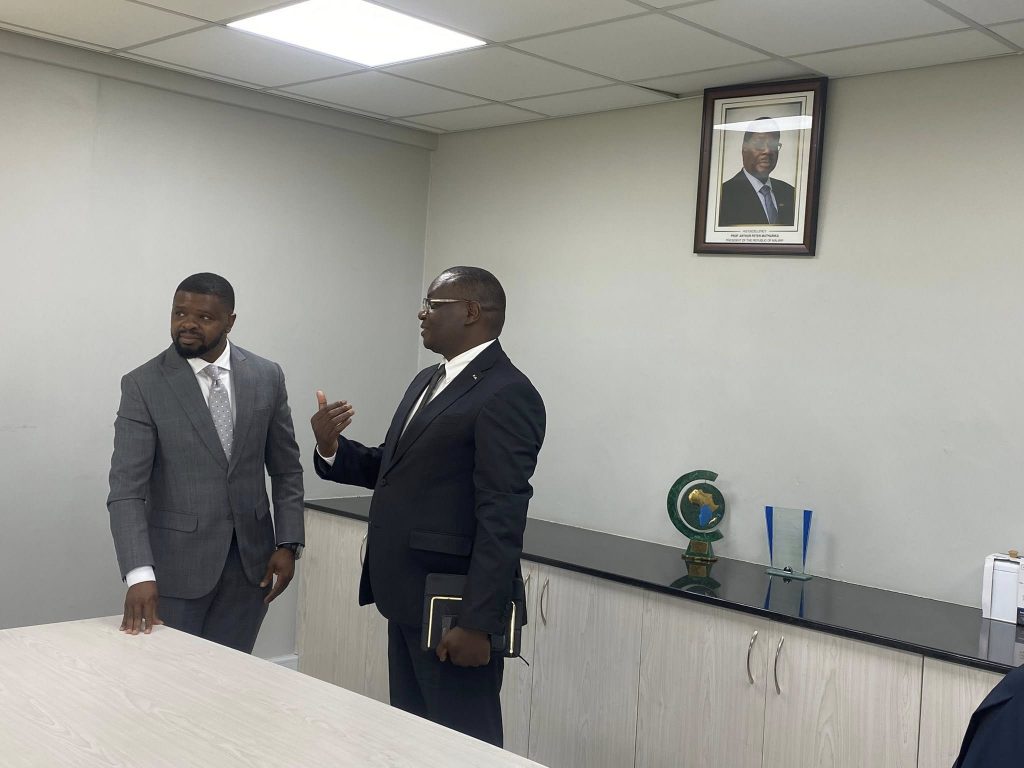
Speaking during a courtesy visit to MACRA, PPPC Chief Executive Officer, Patrick Kabambe, highlighted several initiatives being undertaken through DMAP to enhance internet connectivity and strengthen the country’s communications infrastructure.
He disclosed that the USF Tower Site Initiative will see the construction of 98 towers in underserved communities nationwide, aimed at improving the quality and reach of internet and communication services.
In his remarks, MACRA Acting Director General, Mayamiko Nkoloma, commended the PPPC and its partners for their continued efforts in laying the groundwork for communication infrastructure and internet connectivity. He described these efforts as a critical pillar in bridging Malawi’s digital divide.
He further emphasized the importance of continuous collaboration among key stakeholders, such as PPPC, MACRA, and MoICT, in identifying and implementing complementary initiatives to advance the country’s digital ecosystem and drive digital transformation.
During the meeting, the PPPC also highlighted additional initiatives under DMAP, including the provision of connectivity to 2,500 government sites (comprising 500 government ministries, departments and agencies (MDAs) and 2,000 schools); the procurement and distribution of 2,700 computers and 823 printers to MDAs; support to the National Registration Bureau (NRB) in transitioning to a next-generation, cost-effective digital identification system; digital skills training for 10,000 Malawians; and the provision of technical and financial support to the new National Data Centre in Lilongwe.
The meeting concluded with a shared commitment by both institutions to continue working closely together to build a vibrant, inclusive, and sustainable digital network for Malawi.